
When Hip-Hop Goes Heavy: A Brief History Of Rap Mixing With Punk, Metal & Hardcore
This piece was penned by a contributor to the Genius community.
Earlier this month, the breakout Kentucky hardcore group Knocked Loose unleashed “Hive Mind,” an interdisciplinary project featuring rapper Denzel Curry. While the pairing might appear unconventional at first glance, given both acts' foundations in underground music, shared dedication to intense live shows, and focus on percussive song structures, it’s a match made in distorted sonic heaven.
Hive mind
Bite your tongue, change your face
Hive mind
Make sure the costume will stay in place
Hive mind
No heart behind the way you feel
Hive mind
Line them all up for me to kill
Formed in 2013, Knocked Loose earned a reputation for pulverizing breakdowns and the distinctive vocal delivery and lyrical style of frontman Bryan Garris. Blending the textures of beatdown hardcore and metalcore, their third major studio effort, 2024’s You Won’t Go Before You’re Supposed To, garnered widespread acclaim, earned a Grammy nomination, and led to a high-profile television spot alongside Poppy on Jimmy Kimmel Live!. (That appearance actually prompted some viewers to demand an apology for being exposed to such abrasive music during prime-time hours.)
Denzel Curry himself is no stranger to exploring the intersections of rock and metal. His 2019 rendition of Rage Against the Machine’s “Bulls on Parade” for the Australian station Triple J became a viral sensation. Rather than settling for a standard cover, he personalized the track by integrating a verse from his 2018 song “SIRENS | ZIRENZ” to replace the legendary solo by Rage guitarist Tom Morello. The track has since become a cornerstone of Curry’s concert repertoire. By honoring the pioneers of rap-metal, Curry provided a compelling argument for fusing these genres for a new generation.
The independent, anti-establishment, and underground spirit of hardcore bears a striking resemblance to the infancy of hip-hop, when DJs and MCs organized makeshift events in some of New York City’s most neglected areas. A classic example of this collision between hardcore and hip-hop is the Beastie Boys. The group began as a hardcore punk outfit known as The Young Aborigines during the nascent New York hardcore movement of the late 1970s. Following several lineup adjustments and the release of their satirical rap record “Cooky Puss,” the trio—Ad-Rock, MCA, and Mike D—pivoted their musical focus. They adopted the name Beastie Boys partly as an homage to the legendary Washington D.C. hardcore act Bad Brains, whom they deeply admired. MCA later produced the eighth studio album for Bad Brains, Build a Nation, in 2007.
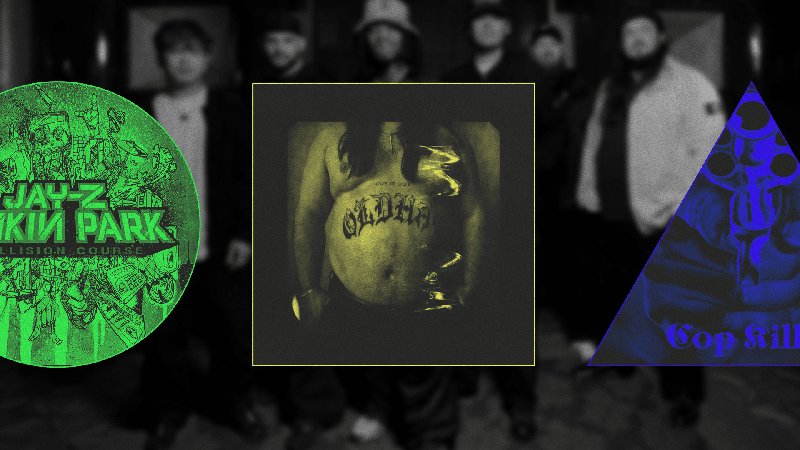
As hip-hop gained cultural momentum throughout the 1990s, the potential for sonic innovation expanded. On the West Coast, a rising star in hip-hop spent his time off from the gangsta rap world indulging in his passion for mosh pits and heavy guitar work. Ice-T’s thrash metal project, Body Count, burst into the public consciousness with their polarizing 1992 release “Cop Killer.” While the song was penned in 1990, it became permanently associated with the 1992 Los Angeles riots, which were ignited by the filmed police assault on Rodney King, a Black motorist.
“Cop Killer” thrust Body Count into the national spotlight, triggering fierce debates regarding free speech and a high-profile feud with President George H. W. Bush. Though the track was eventually withdrawn from public sale, Ice-T remained proud of bridging the divide between the metal/hardcore and hip-hop spheres during an incredibly tense era in American history.
By 1991, the hardcore community had embraced Ice-T, with Henry Rollins, formerly of the iconic SoCal group Black Flag, performing alongside the rapper during the Lollapalooza tour. (Body Count performed “Cop Killer” regularly at these shows.) By weaving the social commentary of his rap lyrics into a high-octane musical setting, Ice-T and Body Count successfully transformed the frustration of Black America into a cathartic outlet. It served as a stark contrast to much of the mainstream hip-hop of that time, which was increasingly focused on commercialization and broad-market appeal.
Over the three decades that have followed, Ice-T has persisted in addressing social injustices through his music, and last year, he updated the lyrics of “Cop Killer” to “ICE Killer” as a critique of President Trump’s stringent immigration policies.
With the turn of the new millennium, musical genres began to merge with unprecedented frequency. The emergence of the nu-metal movement saw an increasing number of rockers incorporating rap elements in surprising ways. Groups like Limp Bizkit, Linkin Park, and Mudvayne utilized rhythmic vocal styles, down-tuned guitars, and DJ turntables to reach a completely new cohort of listeners. Rather than tackling political subjects, these bands prioritized raw emotional honesty, which resonated deeply with a generation of angsty teenagers.
The zenith of this genre fusion is arguably JAŸ-Z and Linkin Park’s 2004 project, Collision Course. While not an underground hardcore act like Black Flag or Bad Brains, Linkin Park had, by that point, secured a unique position for heavy music within the mainstream cultural landscape.
Vocalist Chester Bennington’s signature screams provided a stark, striking contrast to JAŸ-Z’s verses about systemic bias and street life, but the combination proved to be a resounding success. The record was a groundbreaking collaboration that featured the two artists merging their most popular tracks into seamless mash-ups. The project was also released alongside a live concert film, demonstrating how the complex concept of a rap-infused mash-up could be convincingly replicated with the authentic intensity of a live ensemble. Even today, Linkin Park honors these remixed arrangements during their live performances.
(Can I get a encore, do you want more?)
Cookin' raw with the Brooklyn boys
So for one last time I need y'all to roar
Uh, uh, uh, uh (Yeah) (Yeah)
Now, what the hell are you waiting for?
After me, there shall be no more
So for one last time, nigga, make some noise
Get ‘em Jay
These surprising cross-genre partnerships have persisted well into the era of digital streaming. In 2017, the U.K.-based electronic hardcore group Enter Shikari dropped “Supercharge,” a single featuring grime artist Big Narstie. In 2021, Deftones frontman Chino Moreno made a guest appearance on Trippie Redd’s track “GERONIMO.” Most recently, in 2023, Megan Thee Stallion unveiled a “rock remix” of her hit “Cobra,” which featured contributions from Spiritbox.
The trend flows in both directions, too. Lil Uzi Vert and Bring Me The Horizon have worked on each other's creative projects—take a listen to Uzi’s “Werewolf” and BMTH’s “AmEN!”.
Meanwhile, a fresh wave of talent including FEVER 333, Stray from the Path, and Slay Squad continues the legacy of bands like Rage Against the Machine and Body Count, expertly blending elements of hardcore, metalcore, and punk with hip-hop vocals and socially aware messaging.
Streaming platforms have made it easier than ever for musicians to cross stylistic borders, fostering a new generation of rappers influenced by heavier sounds and the manic energy characteristic of punk and hardcore live sets. The SoundCloud era of the 2010s, spearheaded by artists such as XXXTENTACION and Ski Mask the Slump God, paired emotional vulnerability with harsh, abrasive sounds that clearly echoed hardcore and punk traditions.
Today, acts like Death Grips, JPEGMAFIA, and Denzel Curry embody a distinctly modern punk spirit for young listeners who were raised on social media feeds rather than physical punk fanzines.
Although these concertgoers may not engage in the traditional slam dancing that hardcore fans are famous (and occasionally ridiculed) for, mosh pits are now staples at major rap performances. Stars like Travis Scott and Playboi Carti are largely responsible for fueling the “rage rap” movement, defined by its focus on intense pits and chaotic energy. Cross-genre festivals such as Outbreak in the U.K. and Dia de los Deftones have surged in popularity, and rappers like Denzel Curry have shared festival bills with heavyweights such as Converge, Bane, Speed, and Knocked Loose.
Just as those eclectic lineups now seem completely logical to fans, a track like “Hive Mind” by Denzel Curry and Knocked Loose feels entirely organic. The breakdown—which could be interpreted as a sly nod to hip-hop artists directing crowds to engage—acts as a direct command for listeners to lose themselves in the fray.
When I say stomp, you gon' motherfucking stomp, bitch
When I say jump, you gon' motherfucking jump, bitch
Jump, jump
Blegh
Suffer in the hive mind
The timing for such a track is impeccable. Dominant hip-hop singles aren't impacting the charts as they did just a few years ago, while heavy and hardcore music is currently experiencing a resurgence. Chaotic and infectious, a partnership like “Hive Mind” breathes exciting new energy into both styles without sacrificing the fundamental essence of either.
